Showing posts with label Concept Car. Show all posts

Sunday, January 24, 2010

Honda Helix Concept Car not just function as transportation


Honda HELIX Concept Car
Honda presented a futuristic design at LA Design Challenge 2009 earlier this month. Honda Helix is made of advanced adaptive polymers, capable of shifting shape, color or even material properties, when coupled with the user's genetic code (DNA), which would allow a vehicle to not just function as transportation, but rather be an extension of the user, evolving in parallel with the user throughout his or her life.
What is individuality? What does it mean to be exclusively unique? In an increasing world of global commercial goods, is it really possible to be one of a kind? Emerging technologies, such as genetic integration and advanced adaptive polymers, will shatter the current paradigm of what is now considered "personally" unique.
Like DNA, the Helix has 3 major, distinct conformations: A, B and Z. "A" is short and wide for cities that have very tight and intertwining road systems, where agility and speed allow a vehicle to more easily navigate chaotic traffic patterns. "B" is long and low for the sprawling cities of the world, where large distances allow for high speed travel. "Z" is tall and thin for congested cities of the world, where seating occupants vertically on two levels has the most volume per minimum footprint of any vehicle.
By using flexible and transforming multi-functioning parts, the Helix adapts and reacts to specific environments and traffic patterns by changing the orientation of its main capsule for optimal environmental operation and user functionality. Bio-receptors allow the vehicle to micro-adjust even further to meet the exact demands of the user and the environment. The direction of movement stays constant no matter what conformation the vehicle assumes.
Ownership will become more about the fulfillment for the driver through time and less about fulfillment of a product's lifespan. The longer the vehicle is with its owner, the more time it has to evolve to meet the user‘s needs, and ultimately form a unique singular bond between both human and machine DNA.

Tuesday, December 22, 2009

2010 Honda Acura NSX 5.5-liter V10 Super Sports Car Concept

2010 Honda Acura NSX Concept Super Sports Car
Honda is an efficient company. It likes to get the most out of its investments, and that’s what kept us hopeful when we first heard the news of the cancelation of the Acura NSX. Dick Colliver, executive VP for American Honda Motor Co., recently helped emphasize our hopes. According to him the NSX could be revived at any time, and even more "development is mostly done." We already knew this but its good to know that people inside Honda are ready to dust off the NSX project when the world’s economy recovers.

2010 Honda Acura NSX Concept Super Sports Car
But Colliver isn’t completely convinced NSX-like luxury/performance is needed to make Acura a Tier 1 luxury brand - the area of rare air that is currently occupied by the likes of BMW, Mercedes, Audi, Lexus, etc. Colliver told Automotive News, "Being a premium luxury brand is not just about product. It’s the way dealers handle customers. You’ve got to earn your way into the segment.
2010 Honda Acura NSX Concept Super Sports Car
Devotees of the late, great Acura NSX – and that's just about everybody, really – have been waiting patiently for the second coming that once reportedly based on the Advanced Sports Car Concept shown above, but Honda keeps on making us wait longer. While there's still more waiting to be done, at least there's a light at the end of the tunnel, as Honda has revealed that the new NSX will make its debut in 2010.
2010 Honda Acura NSX Concept Super Sports Car
Inside Line reports the car will have a price somewhere around $160,000, right on top of its rivals: Aston Martin V8 Vantage, Maserati Gran Turismo and Jaguar XKR.
The NSX will get a 5.5-liter V10 generating upwards of 600 horsepower and 433 pound-feet of torque. At low speed the V10 deactivates five cylinders to save fuel and lower emissions.
2010 Honda Acura NSX Concept Super Sports Car
The V10 is bolted to a quick-shifting six-speed dual-clutch transmission driving the rear wheels, while a revised version of Honda’s Super Handling AWD system generates the car’s prodigious grip levels, enabling such a quick ’Ring lap time.

Monday, December 21, 2009

2011 BMW 5-Series F10 Sport Concept Design by Lumma Design, TopCar, and Cardi

2011 BMW 5-Series F10 Sport Concept Design
2011 F10 BMW 5-Series plans by Lumma Design, TopCar, and Cardi. The brand-new 2011 BMW 5-Series hasn't even made its motor show debut yet, but tuners are already actively working on their plans to present an array of performance and cosmetic goodies for the Bavarian automaker's premium sedan. German and Russian tuning houses are joining efforts to create bodykit and tuning packages for the F10 5-series.
2011 BMW 5-Series F10 Sport Concept Design
Full set of renderings inside. One of the first proposals comes from a trio of companies, Russia's TopCar and Cardi, and Germany's Lumma Design, that have joined forces to offer a new sport package for the Bimmer. TopCar and Cardi are the russian tuners and Lumma Design is the german tuner. Their renderings show an aggressive front end package including a new front bumper aggressively sculpted with huge air inlets, carbon fiber front lip, LED lighting and honeycomb grill.

2011 BMW 5-Series F10 Sport Concept Design
TopCar and Cardi will handle the design aspect of the project while Lumma Design will be responsible for the manufacturing of the kit as well as the performance upgrades. One version of the kit also features super wide wheel fenders and aggressive side skirts. Therear features a carbon fiber rear trunk spoiler, together with carbon fiber rear diffuser, quad exhaust pipes. Two types of wheeloptions will be available.
2011 BMW 5-Series F10 Sport Concept Design
Although the three tuners have not disclosed any specific details about the package, they did release a set of photoshoped images thatshow a new wide bodykit trimmed in carbon fiber that consists of new bumpers, fender extensions, side skirts and a boot lid spoiler.In addition, the tuners previewed three different alloy wheel designs for the 2011 5-Series.
2011 BMW 5-Series F10 Sport Concept Design
This custom F10 5-series is expected to debut in April 2010, along with details of the full performance tuning package.

Saturday, December 19, 2009

2010 Beachcomber MINI Concept Sports Car The vision of a radically open body concept

2010 Beachcomber MINI Concept Sports Car
MINI achieves all this by consistently expanding the model range and through the unconventional creativity of MINI design. Just a few months prior to the launch of the brand's fourth model announced for autumn 2010, MINI is now demonstrating its potential for further enhancement of driving pleasure and diversity through another spectacular concept car: the concept of a brand-new type of vehicle proudly presented by MINI at the North American International Auto Show (16–24 January 2010) in Detroit. The MINI Beachcomber Concept is a four-seater concept car designed consistently for maximum driving pleasure, taking up the enhanced options of the new MINI and combining these potentials with the vision of a radically open body concept.
A new all-wheel drive system, ALL4, and a flexible interior make the MINI Beachcomber Concept ideal for a spontaneous and active experience. It is designed without doors or a conventional roof, and all other body elements that could limit the intensity of the occupants' encounter with their surrounding world. This allows the driver and up to three passengers to connect with their surroundings - whether cruising through town, enjoying rough tracks in the mountains, or breezing along the beach. The vehicle's space concept, partnered with a modern drivetrain technology, ensures a highly emotional driving experience. The MINI Beachcomber Concept is a symbol of the brand values packaged in a new, radical style.
2010 Beachcomber MINI Concept Sports Car
The MINI Beachcomber Concept combines all-wheel drive with cutting-edge suspension technology, numerous body elements serving to make the car extra-strong and robust, as well as an elevated seating position. Generous spring travel and extra-large light-alloy wheels raise the entire car to a higher level. Access to the front and rear seats is nevertheless exceptionally convenient and easy thanks to the omission of doors and the entry cutouts extending all the way down to the seat bottoms, allowing the driver and passengers to get in and out in one smooth and flowing process. A pleasant and interesting side effect is that the distance the occupants feel from their surroundings is reduced to a minimum.
MINI designers were inspired by the new MINI crossover production model, which they enhanced beyond the realms of urban mobility to create the MINI Beachcomber Concept. In creating this concept, they utilized the technical qualities of the production crossover model, and made adaptations to offer the ultimate expression of freedom. The result is a new open concept driving experience for all your senses, plus a greater degree of versatility than ever experienced before in a MINI. Unique, typical of MINI, and with a great role model from way back when.
The MINI Beachcomber Concept is the vision of a car leaving behind all conventional standards and creating innovative momentum for individual mobility of the future. The combination of traction optimised by all-wheel drive for excursions beyond the beaten track, on the one hand, and an extreme focus on motoring in the open air, on the other, is quite unprecedented in the world of the automobile.
The authentic style and character of the MINI Beachcomber Concept also results from the fact that the brand once already offered an extreme thrill of driving pleasure in the open air by conscious reduction to the very minimum: Way back in 1964, just five years after the market launch of the classic Mini, the creator of the first model, the world-famous engineer Alec Issigonis, already developed an all-open version of this revolutionary compact car.
2010 Beachcomber MINI Concept Sports Car
With its robust structure and the drivetrain technology carried over from the Mini, this four-seater fun car became a great success particularly in the sunny regions of the USA and Australia. Production of the Mini Moke in Great Britain continued until 1968 with a production volume of some 14,500 units, following which production was continued in Australia and Portugal.
Even ALL4 all-wheel drive goes back to a role model from the past, to be precise a prototype Mini Moke fitted by Alec Issigonis with two engines in 1963. On this test car appropriately referred to as the 'Twini', the front and rear wheels were driven in each case by a four-cylinder from the Mini range of engines.
Modern and up-to-date from A–Z, the MINI Beachcomber Concept offers a wide range of innovations for consistent driving pleasure in the 21st century. The outstanding know-how in automotive development of a premium car maker in the areas of design, drivetrain, safety and production technology brings together the undiluted character of the concept car with a wide range of solutions most convincing in practice.
2010 Beachcomber MINI Concept Sports Car
Individual rear seats adjust forward and back to offer the passengers a supreme standard of grand touring comfort tailored to their individual requirements. The rear seat backrests fold down completely to allow appropriate adjustment of interior space for all needs. In practice, this means that the driver and passengers are able to conveniently stow even bulky sports equipment such as mountain bikes or wakeboards securely held in position by special fastening systems.
The MINI Beachcomber Concept is built for the sunny side of life and is simply perfect for spontaneous action. Through its optimum flexibility, the car is able to meet many different requirements, naturally coping with any sudden change in outdoor conditions. Made of an extremely light and, at the same time, very robust special fibre, the roof comes with transparent plastic inserts at the sides and at the rear serving as windows. In its functional qualities, the roof follows the same standard as the most sophisticated and demanding outdoor wear combining maximum protection from wind and rain with minimum weight.
2010 Beachcomber MINI Concept Sports Car
The MINI Center Rail comes complete with an integrated cable duct allowing the user to connect a mobile phone or MP3 player in any position to the car's entertainment system by means of a holder fastened to the rail. Another option is to connect additional sources of light, a cooling box, a laptop or a GPS tracker safely and securely to the Center Rail, each with their own power supply. The range of holders has been further extended especially for the MINI Beachcomber Concept, now including a stopwatch specially made for the new model, a bottle holder, a compact meal box as well as a case for cycling and swimming glasses, clearly reflecting the sporting character of this concept car and simply ideal for the triathlete.
2010 Beachcomber MINI Concept Sports Car
Following the MINI Crossover Concept opening up fascinating new options through the further extension of the brand family, the potential of the MINI's modern drivetrain technology and its flexible space concept is now being used consistently to offer additional driving opportunities in a new dimension. Indeed, the MINI Beachcomber Concept offers a particularly emotional driving experience, demonstrating these qualities once again in that unique style so typical of the brand. Clear proof, therefore, that unconventional creativity still serves today to open up the door to brand-new vehicle concepts pointing into a future bound to offer even more fascinating renditions of that unique feeling so characteristic of MINI.

Friday, December 18, 2009

Ducati W3 Eco Friendly Sport Concept Car by D.I. Luciano Sánchez


Assuring a pollution free era, concept car designer D.I. Luciano Sánchez has come up with his latest creation, The W3, which is aimed toward the popular motorcycle brand Ducati. This leaning three-wheeler is a creation of a sport urban vehicle designed while keeping the demands of youngsters in mind. The vehicle is designed to provide the great riding experience of a motorcycle, but on three wheels.
Because W3 is wanted to be an eco-friendly vehicle, it is powered by three electrical motors, each placed in W3’s wheels, supplied by a lithium-ion battery and connected to a DC power to AC power converter controlled by a computer. For lightening the car, the designers decided to drop out the rims of the three wheels and use aluminum alloy for W3’s backbone.
The three-wheeler is capable of leaning into turns to maintain high stability. It’s meant to give the rider the feel of a motorcycle, but offering much more safety.
As the polyamide is suffering contraction at high temperatures, Ducati decided to use Terblend, a composite of ABS an polyamide for making W3’s body.
It combines the excellent characteristics of each component and reduces the disadvantages of polyamide, such as contraction at high temperatures. With a lightweight body and an aluminum alloy chassis, the electric engine of the car would be able to propel it to speeds in excess of 100 km/h.
The designer here has failed to address the safety issues that could come with this vehicle. Moreover, a top speed of just 100 km/h would not be able to give a sporty feel to many youngsters, whom this concept is aimed at.

Sunday, December 6, 2009

Mazda SAUGA Electric Concept Car


Mazda SAUGA Electric Concept Car
Designers Carlos Salaff and Jacques Flynn believe that by the year 2030, specialized online software would be available that will allow users to design vehicles according to their requirements and get them built by the car manufacturer. Mazda has taken notice and created VMazda - a virtual reality website that acts as a design playground for young people, allowing them to experiment, build, and share their automotive dreams in a virtual world at no cost. With the help of a virtual design mentor, Max's design is rapidly manufactured at one of Mazda's sustainable Direct Digital Manufacturing plants. Max pays a low price of $2000 for the physical car, while paying a monthly bill for the energy his electric car uses (similar to cell phone business model).

Mazda SAUGA Electric Concept Car
Mazda Souga is just an example of the infinite possibilities such a manufacturing system will offer. Moreover, you won’t have to pay hundreds of thousands of dollars for these hi-tech vehicles, as they’ll be made available with a two-year contract, similar to the one we sign when purchasing a new cellphone.
Mazda Souga is a lightweight and minimal sports coupe with experimental shapes, ornate detailing and a dramatically proportioned exterior. Since in the future all digital communication and information devices will be integrated into fashion apparel, the car’s interiors will just feature a steering wheel, a conventional information display and normal controls. After the contract expires, the user can take the vehicle back to the manufacturer and get it remade with the inclusion of new systems and technologies. The car manufacturer will have the ability to recycle parts from the old car, which will further reduce the associated emissions.

Mazda SAUGA Electric Concept Car

Mazda SAUGA Electric Concept Car

Peugeot Capsule Electric ATV Concept designed for all weather conditions


Peugeot Capsule Electric ATV Concept
The concept is inspired from touring motorcycles like the Kawasaki KLR 650 and named Capsule which can do what all ATVs do, but in a more ecofriendly manner. Peugeot Capsule has been designed for all weather conditions and it also has enough storage space to allow for extended overnight adventures. Peugeot Capsule is a design study of a compact single-seater off-roader inspired by motorcycles and targeted to adventure lovers. The author is industrial designer Alp Germaner from Johannesburg (South Africa).

Different with another ATV, the capsule would provide for all kind weather conditions and also adding storage to alowed for extended overnight adventures. A special device had adding to this capsule as single touch screen that would control all vehicle functions and you also remain connected to the world with the internet-enabled satellite connectivity.
The single horizontal screen wiper is mounted on side rails which run along the A pillars, and also act as water channels. The powertrain adopts all-wheel drive system and electric motors.
This system includes GPS navigation, and connection with other Capsules. Side mirrors are replaced by external cameras which are connected to LCD displays inside the cabin.

The concept is fueled by lithium batteries, which provide propulsion to all four wheels, and it has roof-mounted photovoltaic panels that ensure you never run out of juice on a sunny day. The built-in storage compartment is removable and can be used as a stool or a desk at the campsite.


Peugeot Capsule Electric ATV Concept

Peugeot Capsule Electric ATV Concept

Peugeot Capsule Electric ATV Concept

Saturday, December 5, 2009

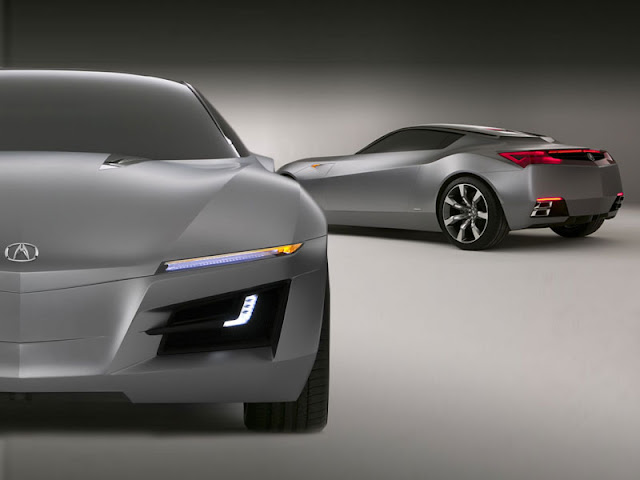
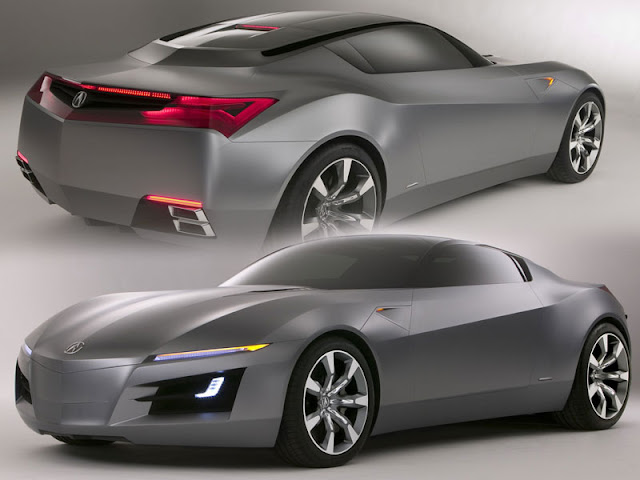
Acura Advanced Sports Car Concept (ASCC ) created to take exotic sports car styling to a new level


Acura Advanced Sports Car Concept (ASCC )
Created to take exotic sports car styling to a new level, the concept is designed to incorporate a powerful front-mounted, V-10 engine and a new high-performance, rear-wheel-drive based version of Acura's exclusive Super Handling All-Wheel Drive™ (SH-AWD™).
The Acura ASCC was designed by the Acura's Los Angeles-based design team that will be based at the new Acura Design Center. The Acura ASCC (Advanced Sports Car Concept ) retains the subtle cues associated with its predecessor, the NSX. The concept's slim, LED headlights are pushed wide and designed to mimic the pop-up headlights found on the first generation NSX. Other styling hints include a modern take on wraparound rear taillights and the all black cockpit.
The concept's exterior demonstrates a dynamic fusion of advanced technology and emotion. The long, pronounced hood features deeply sculpted lines and embossed air vents, both of which hint at the powerful engine beneath. The exterior lines run the length of the body, creating a ribbon-like effect from the front headlights to the rear wheel arches, evoking a feeling of movement and power.
Wide and low to the ground with a 108.8 inch wheelbase, the concept is anchored by grippy 19 inch front and 20 inch rear performance tires which are mounted to custom billet-machined, polished aluminum wheels. Powerful, ventilated carbon ceramic brake discs and eight-piston calipers accent the wheels. Bold wheel arches and flares add to the concept's aggressive appearance.
The low slung cabin is constructed entirely of tinted glass and sits flush against the body. Door handles are also flush mounted, allowing the sports car to retain a clean and aerodynamic appearance. The Acura ASCC features a carbon fiber underbody and the rear is finished with aggressive quad exhaust pipes and integrated rear diffusers, further communicating its high performance potential.

Acura Advanced Sports Car Concept (ASCC )

Sunday, October 18, 2009

Suzuki-Maruti A-Star Concept Car


The Concept A-Star is the first concept car with which designers from Maruti Suzuki India's research-and-development division have been involved from the beginning of styling development. As such, it's an excellent showcase of Maruti Suzuki India's capabilities.
The production model that inherits some of the design themes of the Concept A-Star will be built at Maruti Suzuki India's Manesar plant and sold mainly in Europe but also in India and other countries.
As a hint at the design of Suzuki's fifth world strategic car, the Concept A-Star has sporty, highly distinctive European styling with an added Indian touch;
lively performance within a body that's amply sized for a European city car; and superior aerodynamics and a high-efficiency 1.0-litre engine for outstanding fuel economy.
SMC's fifth world strategic car is the second model in the second phase of our world strategy. The theme of this phase is families, so the design embodies a focus on delivering comfort and freedom to all family members. At the same time, it's faithful to the sporty spirit that's communicated by the Suzuki "Way of Life!" brand slogan. As the smallest of SMC's world strategic models, it also has excellent environmental credentials.
In the Concept A-Star, sportiness is embodied by styling in which dynamic-looking body contours communicate the Suzuki sports DNA and boldly flared fenders and extra-large wheels hint at strong dynamic capabilities. The styling includes pink accents that allude to the forthcoming production model's main target customers.
A chassis that enables lively handling is combined with a body that's compact enough for manoeuvrability around town but amply sized for a city car. Also, the Concept A-Star has aerodynamically efficient body contours and a high-efficiency 1.0-litre engine for outstanding fuel economy. Overall, the Concept A-Star shows that environmental compatibility and safety can be delivered with no sacrifice in style and performance.

Exterior :

  • Body styling that communicates a smart, active, fun-to-drive character with compact elegance
  • Expressions of Japanese and Indian culture
  • Unique front face
  • Side view that conveys a sense of dynamism even when the car is stationary
  • Unconventional lighting with an element of surprise
  • The Concept A-Star's exterior design theme is "a smart, active, and fun-to-drive vehicle". This theme is reflected in hand-crafted details, in expressions of Japanese and Indian culture, and in an elegantly sculpted body with slick surfaces.
At the rear, two pairs of arched lamps combine traditional motifs with an element of surprise. (One of the pairs of lamps is distinguishable only when illuminated.) An unconventional high-mount stop lamp has a Suzuki "S" badge embedded in it like a jewel. Nearer the bottom edge, integrated dual exhaust tailpipes and a rear diffuser convey a sense of performance.


Interior
  • Cabin styling that communicates sportiness and friendliness
  • Sleek, wing-like, floating-look instrument panel
  • Controls and central display designed to heighten excitement
  • Unique pink illumination
  • Materials, textures, shapes, and colours evoking an emotional high
The interior design theme is "giving the user a captivating and exhilarating driving experience". The design communicates sportiness and friendliness through floating-look elements, convex surfaces, sweeping lines, and pink illumination. And throughout the cabin, materials, textures, shapes, and colours are combined in ways that evoke an emotional high.

The most significant interior design feature is a sleek, wing-like instrument panel. A recess below the instrument panel creates a look of lightness and space, and pink lighting in the recess makes the instrument panel look as though it's floating. A translucent hood over the speedometer complements the floating look.
A central liquid-crystal display with audio, climate, and navigation controls adds to the driver's excitement. The steering wheel incorporates controls for the liquid-crystal display, turn signals, headlamps, and wipers. And the gear knob, the engine-start button, and the base of the gearshift lever are designed to add touches of sportiness.
Also, a sporty, dynamic character is communicated by black leather seats with pink trim accents, by long, sweeping curves on the door trim, and by aluminium pedals with functional graphics.

Saturday, October 17, 2009

Concept T Volkswagen Concept Sport Car SUV


Concept T Volkswagen Concept Sport Car SUV

Concept T - unifying the worlds of the SUV and the sports car. With this car, VW is showing how the off-road and sports car worlds can be combined in future to produce an especially exciting and fascinating facet of the automotive experience - the off-road coupe.
The concept car is propelled by a 177 kW / 241 h.p. V6 front-mounted transverse engine. In both on-road and off-road driving, this power is fed to the wheels by 4MOTION permanent all-wheel drive in conjunction with an automatic gearbox with a manual shift option (Tiptronic).
The wing doors are mounted in the upper section of the A-pillars. When opened, they simultaneously swing slightly outwards and steeply upwards. The advantage: an especially comfortable entry and exit as well as comparatively little space required to the side. To provide optimal view even when the doors are open, the exterior mirrors are located high on the A-pillars. The two front parts of the T-bar roof of the concept T can likewise be swung upwards for easy removal.

Concept T Volkswagen Concept Sport Car SUV

To underscore the off-road character of the concept T, the headlights appear to "floatÓ in the bumper and the extremely wide, upward arching fenders. The sides of the latter are cut away extensively. The overall effect gives the impression that large 19-inch wheels stand free in the style of the legendary dune buggy based on the VW.
Secured with 5-point belts, the driver and front passenger take their places in ergonomically formed aluminum flex shell seats. The seats are mounted centered on an aluminum cross member. The side bolsters of the seat, extended far forward and open in the middle, guarantee excellent lateral support. The side bolsters are anchored to the backrest by aluminum hinges.
Key information in the cockpit is projected from behind the steering wheel onto a head-up display. Data such as vehicle speed, engine temperature and information from the audio system are fed to the left half-oval of this display. The speedometer and tachometer stand out clearly as separate displays from the other information.

Wednesday, October 7, 2009

Citroen Eco-Luxury Sedan Concept Car Design by Ankit Prashar


A designer graduated of Coventry School of Art and Design, called Ankit Prashar, of India, "I design what might be the Citroen future in sedans, (of a very distant future)".
Ankit developed a model triplaza of 1 + 2 seats, electrically, wheel - engine and solar roof, with base in the current designs of the signature. Ankit says that this is an electrical vehicle of the generation wheel - engine with batteries of Ion - lithium that feed the engines of the wheels. A fuel battery works like a chest expander of autonomy that recharges the batteries when it is necessary, also, the solar panels in the roof they give energy for the lighting systems.
In general lines, Eco-Luxury Concept has characteristics and details, which peacefully might be in the future models of the French mark. But if we observe well it has some completions that are too much a futurists and few producibles. The most outstanding thing is the opening of his doors.
In the front there is appreciated the origin of Citroen (an excellent idea), where it brings together very well the broiler, with the optical ones and the logo. In the rest of the car, side street and rear part, it is too futurist and it is difficult to extract some conclusion. But anyhow, the idea is very interesting.

Tuesday, October 6, 2009

BMW LOVOS (Lifestyle of Voluntary Simplicity) Concept Car Design by Anne Forschne


BMW LOVOS Concept Car

The BMW Lovos ("Lifestyle of Voluntary Simplicity") Concept is a design study by Anne Forschner that showcases an original approach to car design. It is based on fundamental questions: "How many parts do we use to build the exterior of vehicle? How would a car look like, if it was build by just one (recurring) piece?"
The result of an experimental research is a vehicle that is made by 260 identical, exchangeable pieces which are fixed with a hinge on a substructure.
The individual pieces are movable, which allows the surface of the vehicle to be closed - like the scales of a fish – or opened to the environment. These pieces work like airbrakes and are also photovoltaic, following the movement of the sun when the vehicle is stationary. The pieces of the covered wheels are also functional: as soon as the vehicle starts driving, 12 pieces per wheel change their formation and move inside, just like a turbine. The interior is soft and warm and represents a contrast to the mechanical and technical exterior.
The project is based on a philosophical idea, which asks critical questions about the design, construction and use of road vehicles, as we know them today.
As Anne Forschner explains "Contrasts, emotion and provocation are the main themes of the design." "The world we live in is increasingly complex and we move within multifaceted social structures, hardly noticing that we perhaps lack an overview over how products and services influence and overwhelm us.
"We rarely question these structures and continue to live and consume habitually. The car represents this world in the form of a physical object." Lovos aims to oppose and question the familiar process of designing, building, purchasing and driving cars. The project is a symbol for the Life Of Voluntary Simplicity and is an object that seeks to provoke the viewer to sidestep his or her embrace of pleasant conformity.

About the Designer
Anne Forschner is a 24 year old german student who has just finished her 7 Semester Transportation Design Course at Pforzheim University. For her final Project she got sponsored by BMW in Munich and graduated with a Bachelor degree in July 2009.Before and during her studies she was able to complete several Internships with Mercedes-Benz.

Monday, October 5, 2009

Sunbeam Tiger Electric Concept Car Design


The Sunbeam Tiger Concept is a spiritual successor to the 1925 Sunbeam Tiger racing and Land Speed Record car, and was created to virtually commemorate the 100th anniversary of the Tiger's Land Speed Record win (1925 - 2025).
The car was designed by Ryan Skelley, a design student of Coventry University, as a future model to celebrate the centenary of the original Sunbeam (1925-2025). The car is powered by an electrical engine, pushing it 0-60mph at 2.3-seconds, achieving 160mph top speed and a single charge for 800 miles. You can get the charging done in 4 hours. The Sunbeam Tiger Concept is made of eco materials - recycled aluminum tubular chassis, soy foam seats with Biofabric, vegetable oil resin body panels.
In September 1925 the V12 powered Sunbeam Tiger driven by Henry Segrave reached a half-mile record speed of 145 mph (233 km/h).
The Tiger Concept is powered by an electric powertrain with a lithium-titanate battery pack which can be fully charged in 4 hours from a standard UK power socket. Main estimated performances are a 0-60 mph time of 2.3 seconds, an electronically limited top speed of 160mph and a driving range of about 800 miles between charges.

The Sunbeam Tiger Concept is characterized by the use of environmentally friendly materials for many components, including a recycled aluminum tubular chassis, soy foam seats covered in Biofabric, natural fibre brake pad,s eco-paint, cornstarch tires and locally grown Hemp-fibre, and vegetable oil resin body panels.
The roll bars are built directly into the seat frame and the seat frame is built into the chassis for improved safety. The headlights and tail-lights adopts high power, energy efficient, WOLED lights. Ryan Skelley comments: "I wanted to create a British roadster that would be the first of its kind in terms of its drivetrain and use of materials."

About the Designer
Ryan Skelley is a final year Automotive Design student of at Coventry University. Among his professional experiences is a six-months internship at Land Rover (summer 2008).

Sunday, October 4, 2009

Raptor Concept all-terrain extreme dune buggy designed by Ryan Skelley

The Raptor Concept is an all-terrain extreme dune buggy designed by Ryan Skelley as British brand Bowler's first entry into the Tecate Score Baja 1000 race. The vehicle features a design characterized by an an exposed chassis with A-pillarless design, a cantilever roof and minimal bodywork with angular shapes.
The all-electric drivetrain has a unique "hot-swap" battery propels the raptor to speeds of up to 130mph and a race distance of 190 miles. As Ryan Skelley explains, "The Raptor is inspired by the Dakar and Baja rallies and the vehicles which compete in them. "Whilst keeping elements of traditional 4x4s, the design also incorporates modern-day technology and eco-conscious materials."
The vehicles angular bodywork takes inspiration from both modern architecture and superbikes, resulting in both a unique vehicle aesthetic as well as a highly functional body panel system.
The body panels are all held onto the vehicle with hex-head bolts, are all independent of each other and can be replaced quickly when damaged. The vehicles alloys were designed to be in sync with the bodyworks aesthetic, where as the tires were designed to create a contrast, using a combination of both dune buggy paddle tires and digital technology as inspiration. Both tire and alloy interlock to create an image of strength and solidarity. "The vehicle contains many unique features, such as the exposed carbon fibre chassis designed to bring the occupants closer to the action and heighten the sense of speed, whilst providing ample safety.
"A lack of A-pillars and a cantilever roof provide an unrivalled view from the driver's seat, giving a near panoramic view of the landscape."

The electric drivetrain is powered by Lithium-Titanate batteries, rechargeable through both a standard wall socket or a dedicated high powered outlet. The batteries can also be quickly and easily replaced using the a "hot-swap" battery system - based on the Better Place battery technology - allowing for the old pack to be replaced with a fresh, fully charged battery in just 1 minute.
The concept was conceived as Ryan's final year major project and was also developed as a 1:4 scale model. An overview of the construction process - inclusing some modelling tips - was published on DesignerTechniques.

Additional notes
The main dimensions are a length of 3,990mm, a width of 2,500mm and a height of 1,680mm. The vehicle's battery consists of two Enerdel Lithium-Titanate packs in tandem, a total of 52 KW, paired with a next generation Siemens electric motor and single speed transaxle. The iPhone in the dash provides the vehicle with a constant internet connection as well as acting as a secondary screen. The phone allows the occupants to receive course and weather updates, race statistics, GPS data, and a provides a communications link to the rest of the team. The confederate flag is used not only as a humour piece, but also to reinforce the vehicles rugged, gun-ho nature. Teamed with the orange paintwork, the vehicle echo's the spirit of a particularly famous Dodge Charger from years past.

About the Designer
Ryan Skelley graduated from Coventry University with a Bachelor of Arts with Honours First Class in Automotive Design with Professional Enhancement. Among his professional experiences is a six-months internship at Land Rover's G-Deck design centre (summer 2008). He is currently seeking work in the design industry and has an active interest in both automotive and product design. He is the author of the Sunbeam Tiger Concept, presented by Car Body Design on April 2009.


Wednesday, September 23, 2009

Volkswagen E-Up! Concept Car "Micro-mobility in the city"


Volkswagen is comprehensively addressing implementation of this everyday practicality. These efforts not only encompass the vehicle itself, but the entire environment around the car driver. In the city, for example, this includes the realisation that after parking the Volkswagen E-Up! Concept people will want to cover shorter distances without a car - from the job to lunch, to the fitness studio, another meeting, whatever is on the day's schedule. For these shorter trips, the Volkswagen "Micro-mobility in the city" concept team has invented clever zero-emission micro-vehicles. The Kickstep, for example, which is an ultra-compact folding scooter. And the electrically powered Microbully, a scooter that also fits easily in the Volkswagen E-Up! Concept load space. There is also the ped-tric, a folding bike with electric motors built into the wheel hubs that could also make the trip to the city aboard the Volkswagen E-Up! Concept And even the VW_1M, a large electric moped - the size of a carry-on case when not in use - that could be stowed in the Volkswagen E-Up! Concept without even needing to fold down the rear bench seat. Such micro-mobility solutions were created at the Volkswagen Design Center in Potsdam. So the E-Up! will be putting many things into motion.
The zero-emissions concept car designed under the leadership of Dr. Ulrich Hackenberg, Member of the Board of Management, Volkswagen Brand, and Head of the Development business area, is based on modules of the New Small Family anticipated in the year 2011, but at a length of 3.19 meters it is even more compact. It also offers an innovative 3+1 seating concept.
The 135 km/h fast 3+1 seater is driven by an electric motor with a peak power output of 60 kW (continuous power: 40 kW). The motor of the front-wheel drive car, which is mounted in front, develops a maximum torque of 210 Newton-meters right from rest. The driver activates forward or reverse gear via a rotary knob in the centre console. The fact that the Volkswagen E-Up! Concept will also quite clearly offer driving enjoyment is demonstrated by a look at the car's classic 0 to 100-km/h sprint time: 11.3 seconds. The Volkswagen E-Up! Concept develops even greater responsiveness in the intermediate sprint from 0 to 50 km/h in city driving: 3.5 seconds. This dynamic performance is based first on the electric motor's excellent torque characteristic and second on the low kerb weight of the Volkswagen E-Up! Concept, which is just 1,085 kilograms.
Lithium-ion battery: The car's low weight is quite astounding, given the fact that 240 kilograms are taken up by the lithium-ion battery. The implemented battery's energy capacity of 18 kilowatt-hours (kWh) enables driving distances of up to 130 kilometres, depending on driving style - enough for the city and the drives of most commuters. The Volkswagen E-Up! Concept will be "refueled" in the garage at home, in a parking structure or on the road at one of the future municipal recharging stations that will be enabled by chip card. Depending on the available charging infrastructure and the battery's momentary charge state, the storage battery could be charged to up to 80 percent of its total capacity within an hour.
If the batteries are recharged in a home garage, for example, by plugging it into a 230-Volt household outlet, this would take a maximum of five hours. Generally, off-peak night-time electric rates are very inexpensive. So refueled at night the Volkswagen E-Up! Concept could be driven 100 kilometres for just two Euros in electricity costs (about 14 Euro cents / kWh).
The batteries themselves are housed in the underbody of the Volkswagen E-Up! Concept To optimally distribute the weight of the battery system, it is housed in a special, crash-protected tray in the underbody frame. Air cooling ensures a constant heat balance within the batteries. The fans and heat exchangers needed for this are housed in the front section of the underbody. In 2013 this will become a reality for the first time.

Bugatti Galibier 16C Concept Car comfort and elegance of a modern four-door saloon


Revealed at a private event to customers and what Bugatti refers to as "opinion-makers" this past weekend at the firm's home in Molsheim, the 16 C Galibier is a conceptual proposal for a four-door, four seat sedan that could very well go into production in the next couple of years.
At the historic site where Ettore Bugatti once laid the cornerstone of his company, Bugatti's current president, Dr. Ing. Franz-Josef Paefgen emphasised that the Bugatti Galibier 16C is one of several concept studies with which the company is considering for the future of the Bugatti marque.
Power comes from the works 8-litre 16-cylinder motor with two-stage supercharging. It can churn out between 588kW (800hp) and 735kW (1,000hp), all of which is channeled to all four wheels using the AWD system. Standard fuel is petrol but ethanol can be used as an alternative. To stop it running away from the driver is a set of powerful carbon ceramic brakes.
The Bugatti Galibier's design masters the challenge of uniting sportiness with the comfort and elegance of a modern four-door saloon. The basic architecture picks up on the torpedo-like character of the Type 35, which was already revived in the Bugatti Veyron, and reinterprets it. With the typical Bugatti radiator grille, big round LED headlights and the clamshell running the length of the vehicle which became synonymous with the brand identity under Jean Bugatti in the Type 57, this car transports the Bugatti genes into the modern world.
The interior reflects the elemental design of the exterior. The dash panel has been reduced to the essential; two centrally located main instruments keep even the rear passengers constantly informed of the actual speed and previous performance. Parmigiani, the Swiss maker of fine watches, created the removable Reverso Tourbillon clock for the Bugatti Galibier, which may be worn on the wrist thanks to a cleverly designed leather strap.
"Galibier" is not just the name of one of the most difficult alpine passes along the Tour de France but, in its time, was a version of the four door Type 57 unequalled in sportiness and elegance.